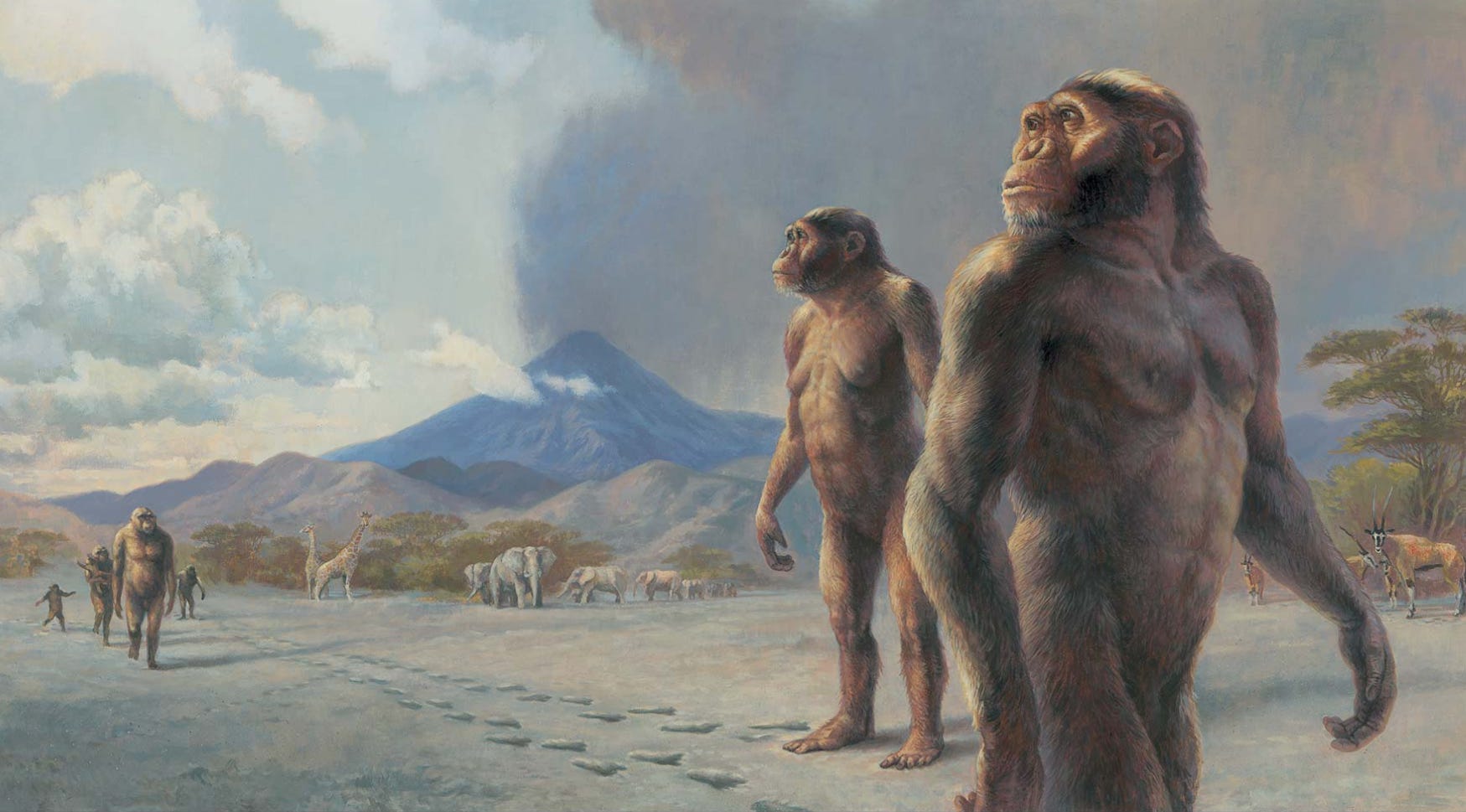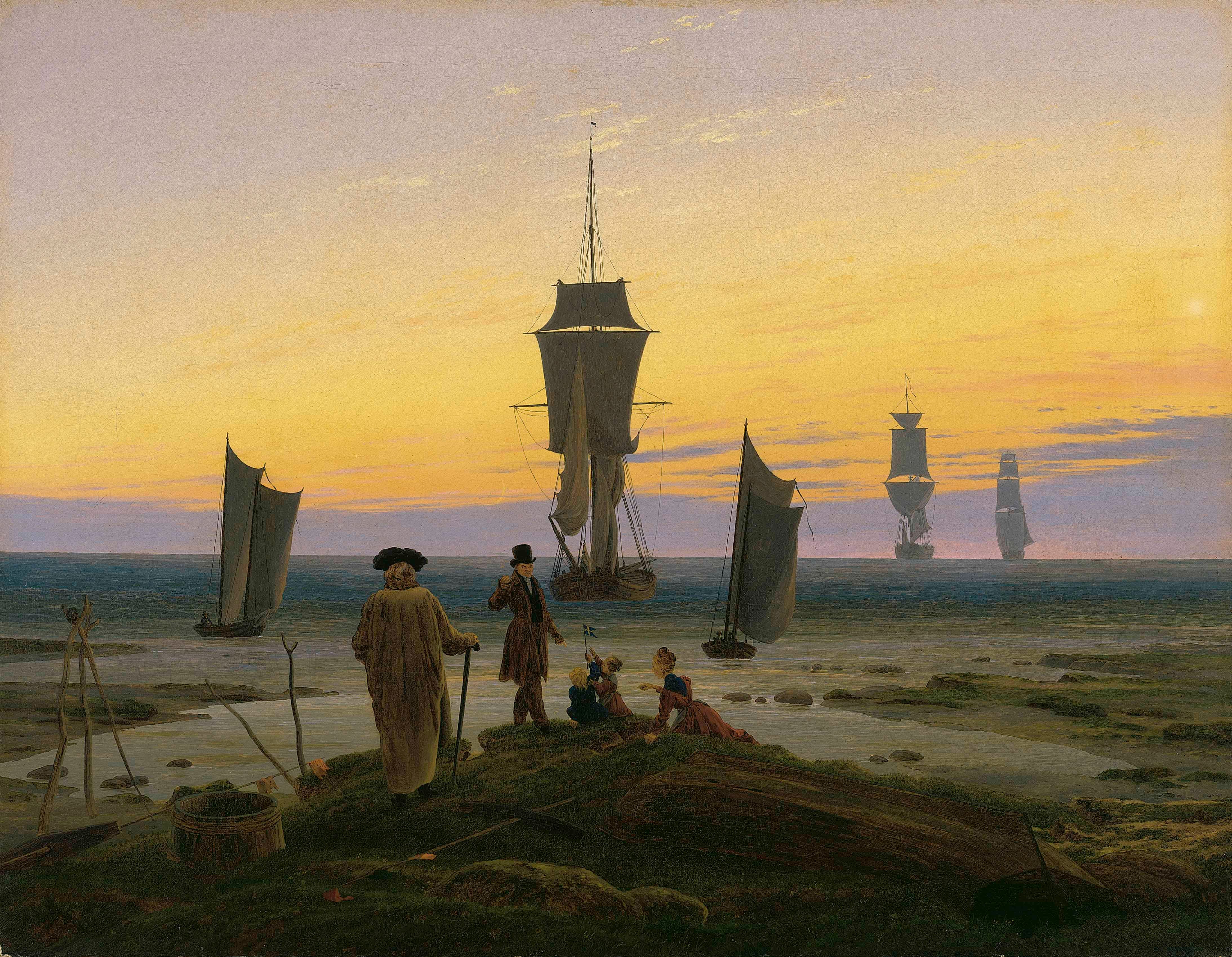
The millions-of-years-long development of the brain within the human genus is evident in leaps and bounds of consciousness, from cave dwelling to spice smelling. Over this span of time, our brains grew at a similar rate to which our environment expanded and complexified, from tribe to global village, from grassland to internet, moving through them by “knuckle-dragging” or “surfing.
Our brain proved itself to be a glass onion—more and more layered yet more and more transparent. It physically grew as we invented ways to build civilizations, built them, and learned how to organize societies to maintain or destroy them, and at the same time, we gazed inward, mapped the brain and its thoughts, all the while attributing external developments to the internal. From this correlation emerged a common understanding, one that is most intuitive and perhaps sometimes true: increased brainpower results in innovation. “Get smart, then invent.” But what if the opposite were true? Did some inventions make us smarter, dumber?
How often has innovation come about at random, even by apparent happenstance, and, as a consequence of the environmental changes catalyzed by such strokes of luck, our brains grew, and thus our whole psychology evolved? What happens when lightning strikes the stick?
While we often define psychological evolution or the progression of thought as a cause or effect of social happenings—empires, revolutions, enlightenments, and intellectual schools—we can underestimate the relationship between technology, nature, and brain development, specifically the creation of tools, or the harnessing of nature in some novel way, which either increases or decreases bandwidth for thought.
Fire
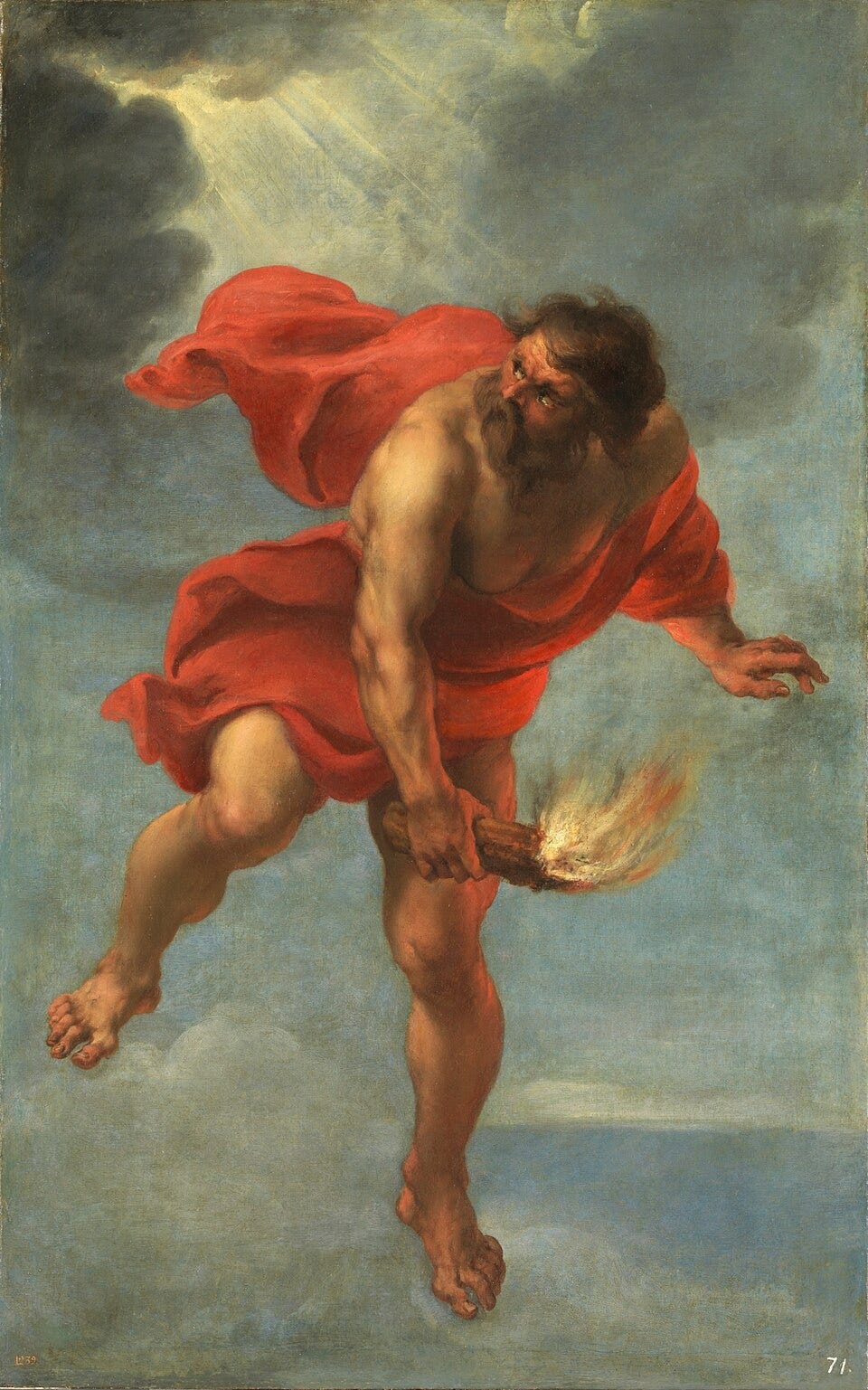
400,000 years ago, lightning struck a forest. Wildfire scorched the plants and animals in it. When human scavengers came rolling through, they ate the scorched plants and animals. They tasted better and were easier to chew. What followed was a psychophysiological evolution; a metabolic trade-off demanded less energy from the digestive system to process and extract nutrients from raw food, and the resultant caloric surplus effectively beefed up the brain. Less time spent chewing and digesting plus more time spent socializing, sharing, and storytelling around a fire equalled smaller guts and bigger brains.
Alternative theories suggest this event took place not 400,000 but two million years ago. That’s two million years of brain growth—a tripling in size, to be exact—only to be slowed after the last Ice Age, 11,700 years ago. Our brains have shrunk by 10% since then, likely due to the offloading of individual tasks to the group, as cooperation was increasingly encouraged by civilizations centred on a common goal. But what would the history books read, and who would we have become, had it not been for this massive brain growth which was literally sparked by fire?
This is the strongest case for how an innovation altered us, how we organize ourselves in groups, how we survive, and what our brain spends its most valuable resource (thoughts) on.
Fire propelled us from the hunter-gatherer days to agriculture, civilizations, and abstract thought. Because cooked food was more calorically dense (you could eat more of it, quicker, and expend fewer calories chewing and digesting), it could be shared. This helped us get along and form cooperative societies. More brainpower, then, in turn, invented farming tools and ways to innovate them, but this was, perhaps, only first made possible by the physical increase in brain size thanks to fire.
Was it a win? Did fire catapult us ahead in the race towards enlightenment of humankind, the realization of our true, predestined potential? We can never say for sure, despite the fact that we live more comfortably now than then. But if we are to be a bit cynical, too, we may look to the following observation on comfort made by historian Yuval Noah Harari. “We did not domesticate wheat. It domesticated us.”
Apparently, the grueling farm life gave us less leisure time than did hunting and gathering. All the hours tilling the fields, picking weeds, and lugging manure in the sun proved to take more time and offer fewer nutrients than did a hunt for an elk. Most of us don’t do that today, but chances are, your job is only two degrees separated from the agricultural industry, the science behind it, and the marketing efforts around its sales and consumption. We can extend this to healthcare, urban planning, life insurance, almost any industry that works towards the betterment of the society the agricultural revolution left us. So while your Rice Krispies keep you alive, they also domesticate you as you work to serve their production, consumption, and aid the repercussions of the sedentary lifestyle and the psychology of instant gratification they ask of you.
By the same token as our domestication by wheat, we did not invent fire; it reinvented us.
Our psychology—roughly, our cognition, beliefs, motivation, emotions and self-perception—has been altered forever by fire. The sheer size of our brains has tripled because of it, and our cultures have all been fed and built on the back of its ability to cook rice, corn, and wheat. In modern times, we are still mesmerized by flames when we gather around the campfire. But it remains a source of destruction when used as a weapon of war. It threatens our survival as much as it promises its continuation, so is it a zero-sum accident or a sacred companion?
Cameras
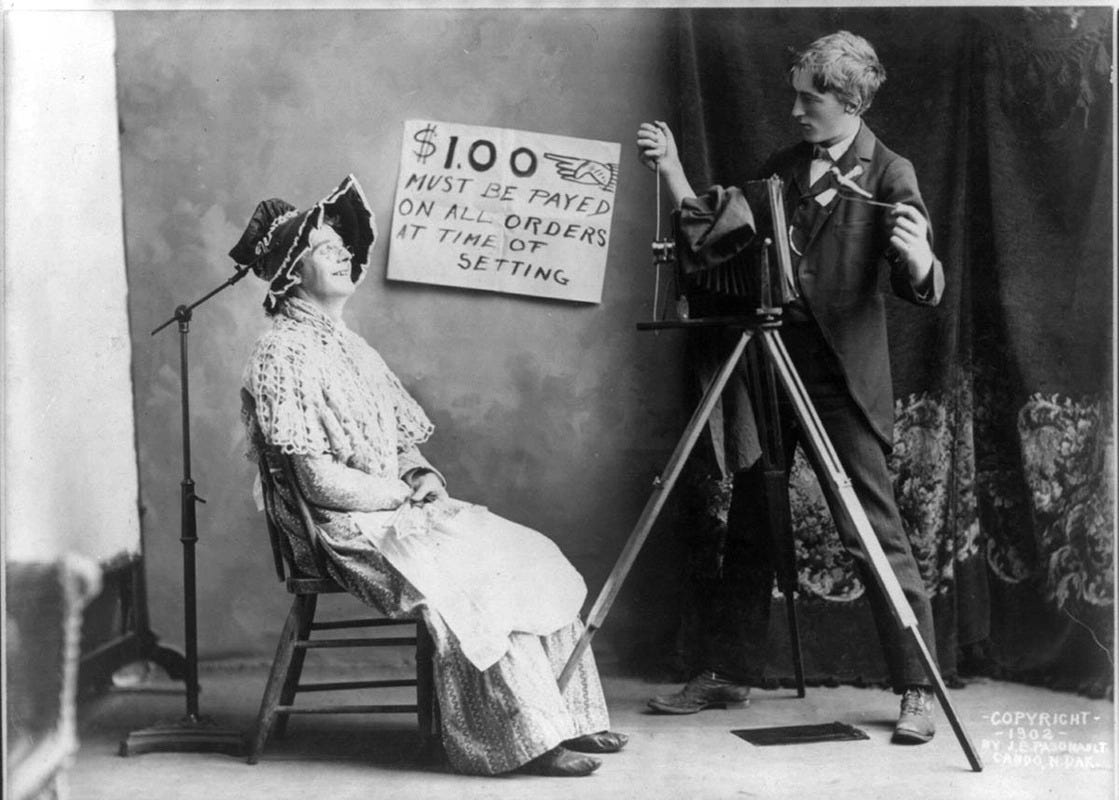
Imagine seeing yourself for the first time. “Is that me?” This was the experience of some people long ago. And it was the shift that occurred in the collective unconscious, a potential unlocked, predicted, and coded for in the DNA of our species, an ancestral memory stored for good. We peered into a pool of still water, and what looked back was not only a reflection but a realization. Imagine not, for now you know how you are viewed.
Obsidian stone was the next medium and original inspiration for the modern mirror, which came much later. Then came the camera in 1826. In 2026, our image contains no mystery. Thanks to the steady stream of selfies, mirrors, and photo IDs, my self-image is internalized. What I see becomes what I am. Thanks to the media’s waves of TV, film, and short-form content, we are constantly laying eyes on a re-creation, a contrived re-presentation of the visual human being, which additionally impresses upon us what we strive to imitate. Gone are the days of imitating icons in solitude and meditation, or solely modelling a mentor or parent. The sheer number of times we are exposed to an image of a fake person in the media rather than a real one dares to have a profound effect on how we view and define ourselves.
But we are made in the image of God, or so they say. Image—meaning the imitation or projection of something, either in receiving it or transmitting it to another—is like a copy that gets skewed through a subjective lens. Art used to capture who we were. So did storytelling, mythologizing and hero-making. Now it is game shows, sitcoms, news programs, TikToks, pornography, documentaries, and dramas that capture our attention most and house the imageo dei, simply yet subconsciously, because that is what our eyes are often glued to, sucking us in like a dementor. This makes us think that we must value what we pay attention to, because attention is valuable.
If we pay so much attention to watching and unknowingly imitating these screen idols, we put ourselves into a position of cognitive dissonance—when our actions and values do not match up, there is a mental discomfort that can only be resolved by closing the gap in one of two ways: altering our actions or values. The funny thing is, however, that it usually goes one way; people alter their values to fit their actions. It’s a rule in psychology that attitudes follow behaviour, and it is a curious principle because it happens without awareness, as if there is an unconscious mechanism making people double down on believing in something to prove it was worthwhile doing. Otherwise, they might have to plead insanity to explain why they did something they do not believe in. We justify fake people in media as worthy of attention and imitation simply by the fact that we cannot take our eyes off them.
This changes how we move and think through the world. Our psyche now contains a sub-stream of consciousness which funnels attention towards modelling the ideals hoisted by Hollywood and politically-fueled, profit-driven media, causing us to discount the immediate environment and traditional heroes in favour of comparison to famous characters. And this is just on the consuming end.
On the production side, we turn our lives into slop for strangers to dig on; we turn our image into a commodity and believe our price to be higher than it really is because it received investment via the glittery-yet-not-golden currency of attention and validation. They say you are what you eat, but when you wish to be on the menu, you will do anything to become what others hunger for.
You might argue that people can clearly tell the difference between movies and real life, able to parse between the images they absorb from the media and how they perceive themselves, and to that I might simply retort that the unconscious is more powerful than we would like to admit, and no matter what we consciously know and profess as beliefs guided by truth is really an inferior influence to the portion of the iceberg that remains underwater yet dictates the whole trajectory. What we mindlessly soak up, quietly despise, or secretly admire and thus pay valuable attention to becomes an object of worship and therefore imitation—becomes our God.
Then again, what kind of crank would want a world without a good movie, or one where you could not lie eyes on the Himalayas without climbing there yourself, or view Earth from space, or FaceTime a loved one a thousand miles away? But still, much like fire and many other innovations which helped to evolve our psyches, the custom is either two steps forward, one step back, or one step forward, two steps back. What we gain in accessibility, we lose in discernment in deciding what or who to imitate.
Paradoxically, cameras made us more self-conscious yet less conscious of the Self. Without them, could the thought, “I look good,” be otherwise possible?
Automobiles
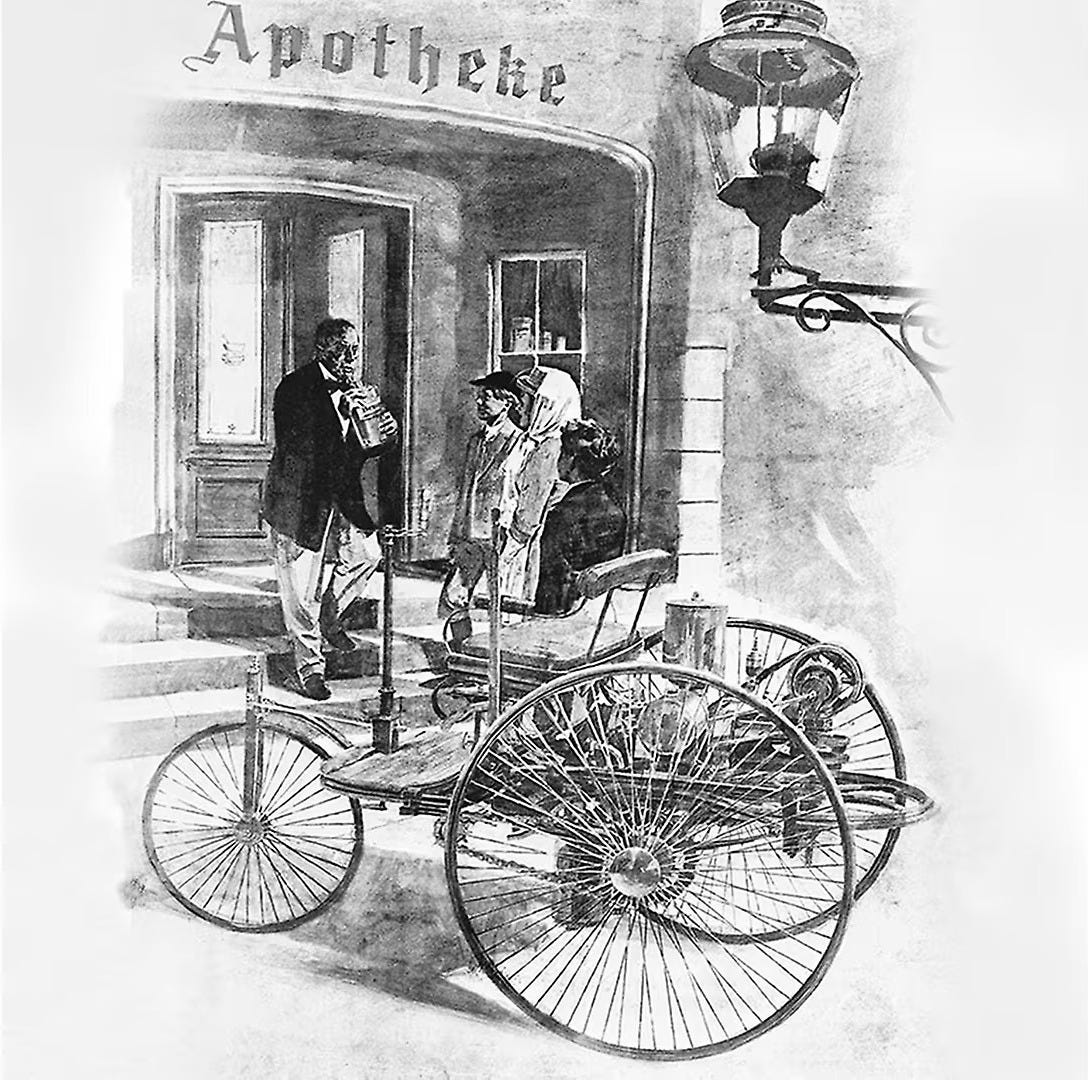
A new horse has arrived, and it does not need hay or pats on the nose. This one took us cross-country, but we arrived at a place even farther from home. Our psychology has been altered by the ability of vehicles to separate the person from his or her worth. We may view cars as animate objects and the people in them as parasites.
Drive across a four-lane bridge during rush hour and see how much respect that experience allows you to garner for your fellow human. Imagine the same scene, but everyone is on horses, going full-speed. Would you not think that something is wrong, that everyone is rushing? We used to trot. Now we drive the Autobahn. Perhaps our psychology has not caught up.
Besides the rush of road rage and how it easily brews resentment, sows distrust, and accounts for behaviours like speeding, brawling, or public shaming (see online complaints about bad parking or dangerous driving), cars also complicate the status game. How nice your car is indicates, with at least some degree of accuracy, your level of wealth, but it also confuses the onlooker as to your social status. A wealthy business owner may drive a Lamborghini, and while that signifies his financial success, it does not signify any other aspect of his social standing or political position, his reputation or his morality, because his wealth is not necessarily attached to social capital. Historically, however, a rich man was part of the nobility, a respected social class, and his horse and carriage were decked to the nines accordingly, for all to know what kind of person had entered town. Now, we have nearly the opposite perception: when we see a fancy car, we assume the driver is a crooked asshole who put his foot on others’ necks to get ahead. Additionally, Musk’s Teslas showed that we are willing to act like Robin Hood and vandalize private property because of brand affiliations, and those vehicles became a signal for lower status via perceived ignorance or bigotry. The Cybertruck screams an embrace of a dystopian future, if not its shepherding.
But the main point I want to hit home is not status obfuscation or enshittification of aesthetics but major alterations in psychophysiology. We have become numb to speed and divided by steel. The risk to life from reckless driving is understated. With hundreds of metal giants whizzing by you each day, you subconsciously see your townsfolk as drones operating a machine rather than neighbours, more like automatons than soulful beings with families. The stimuli do not match their value. Traffic is annoying, and the people are to blame. “There are too many of us!” “The city is congested, overpopulated!” These are the dispositions that lead to justifications for eradication. When you lower humans to the category of a nuisance or pest, you strip them of their inherent sanctity and basic dignity and rationalize their mistreatment and erasure.
Whereas cars cut down on travel time, they increase our capacity for resentment of the human race on a scale broader than tribal conflict (because most drivers are strangers in abundance) to the point it’s deicidal: killing God by virtue of the thought that Creation itself is flawed, a mistake, or a cruel waste of time. When headlights begin to resemble the eyes of man, and we stare into them with fury and wish them dimmer, we subtly manifest a message of antinatalism and metaphysical pessimism of a Schopenhauer kind, which posits that life does not justify itself.
Perhaps we are not cut out for all technological innovation and psychological evolution, our bodies and social systems unfit for the job. This goes without mention of the elephant in the room—AI. But there is no going back.
Tend the Fire
The fire needs tending to because it will burn with or without us. Better that we contain it. In other words, while these three innovations may have been sprung upon us, outpaced us, or evolved faster than our imaginations for them, they are now our responsibility, for better or worse. At least in our lifetime and those in the foreseeable future, we will not get rid of farms, cameras, or cars. And we will not shrink our brains back down to prefire size. But we can become more conscious of our relationship to these innovations and evolutions, and work mindfully to not let them change us in unwanted ways. Make the unconscious conscious. Seeing clearly without projection and transference from these objects is perhaps the only solution. By remembering who we are and viewing the current environment as novel and impermanent, and seeing ourselves as the same, we should recognize a give-and-take, a relationship between mind and world of which we are sovereign. Until the sun swallows us in flames that eternally damn and resurrect us.