

Transgender people feel they are trapped in the wrong body, and perhaps they are as correct as anyone who feels that the aura of their personality cannot be merely contained in flesh. But if these two groups were truly the same, the former would not feel inclined, as they do, to modify their flesh in an attempt to capture a spirit that transcends it, which is about as stubbornly committed as stuffing the butterfly back into its cocoon.
For the sake of this essay and beyond, I will coin the term “cocoon syndrome” to refer to this tendency to pursue, force, or revert to a premature state under the illusion that it is a more enlightened one. The definition also encompasses the misuse of the physical domain in an unconscious attempt at healing the soul or at pacifying a non-physical entity like an emotion.
Nonduality
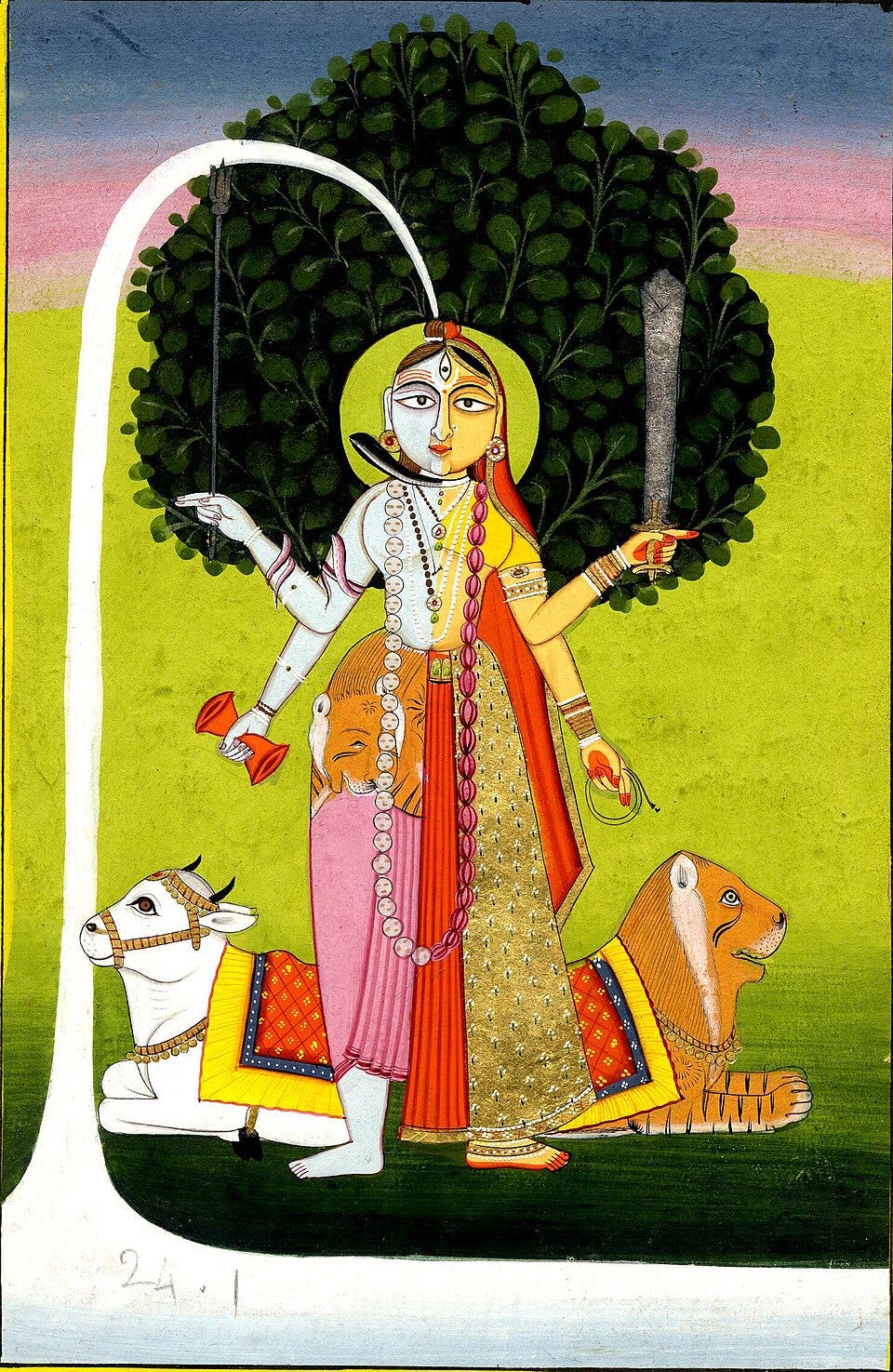
It is a spiritual truism that nonduality equals wholeness. Jesus marries heaven and earth, washes sin with forgiveness, and loves the enemy. The four directional planes meet on the cross, where life confronts death and eternity dissolves time. Hindu deity Ardhanarishvara is half male, half female, representing the union of the masculine and feminine energies in the universe. In psychology, the tension of the opposites, that is, between conscious and unconscious (as well as anima and animus), is not to be avoided through further separation but reconciled through the meeting of the two. There are numerous more embodiments and personifications of this truism exemplified across religion, myth, and science.
To end the civil war between dual forces, you must establish a truce, not a border. But transgender people (and they are hardly the only ones who do this) make the mistake of trying to force an end to the war by heavily arming one side for a counterattack (pitting the gender of the body against the gender of the soul) and hoping it will win. “The man in me will rise to the surface!” say the women who surgically remove their breasts and take testosterone pills in an effort to triumph over and escape from physical limitations. But what looks like freedom can just be another cage, another war, or the same cocoon you left behind. What if the man in you, your animus, could be integrated into your personality instead of your body?
We must have no sense of the development of the person outside of the physical. We must have forgotten that people can undergo drastic personality changes without masking it with something visible. It is either socially unacceptable for this change to happen without a warning, as if to say, “hey, I’m warning you, I am different now. Don’t treat me like you did before,” or there is simply no language or understanding for the development of the person in psychological or spiritual terms. You don’t need to be treated differently to feel different; you can grow without getting validation from everyone around you. In fact, not seeking such validation is probably a prerequisite to such growth. But for this society in which consumers need to see the product, and where everything is about enhancing life with stuff, it is no wonder that the inner world relies on the outer world to advertise its existence.
The duality of good and evil creates another major debate on the possibility for both forces to exist in a livable world and the potential for each to be redefined inside a framework of nonduality. The whole school of Gnosticism, which I mostly personally align with, aims at reforming the Christian notion of good and evil being irreconcilable opposites into seeing the average person as being somewhere in the middle. Heaven and Hell, God and Satan, and sin and grace are false dichotomies when viewed as finite destinations or actual essences of the real world. They do, instead, capture the amalgam of data points at either end of the psychological spectrum. They serve as benchmarks for the extremes. But the Gnostics posited that Jesus was actually speaking in metaphor, and that salvation is available through internal processes, by the process of accepting certain beliefs around oneness, wholeness, love, courage, and pursuit of truth. Basically, Heaven is a state of mind; channelling and embodying divinity is available in the present self via psychological and spiritual transformation. This correction, if you will, by the Gnostics, goes to show there was always a need for the literal to be traced back into the metaphorical, the physical to the non-physical, and for boundaries between opposites to be dissolved internally but not always externally. In other words, don’t miss the plot.
Autism
Transgender people have an inkling of the truism that nonduality equals wholeness but take it literally, as autists do, and reduce it to biology, defining the process of becoming in largely physical terms. They try to mend the proverbial problem of incompleteness with flesh modifications like hormone replacement, surgery, and outward expressions in fashion, tone of voice, flags, and community—they voluntarily clip their wings. They seek return to the comfort of the cocoon, the unconsciousness of the womb.
Using the body as the tongue—that is, communicating with the body instead of words—is par for the course for many autistic people, especially those non-verbal who stim, have meltdowns, and make gestures. This tangible, tactile domain is accessible, present, and real, and that is why autistic people elevate it to the primary level of concern. This is why autistic people are less likely to be religious, because they tend towards logic and evidence, and they cope with their tendency to notice discrepancies in patterns by following routines and reducing overstimulation. For them, the unseeable is blocked out because the seeable is already too much to process. The geometric patterns of the universe, the fact that shapes seem to exist in perfection in nature, like the rings around planets and within tree trunks, might lead someone to believe in a divine design, but this is lost on autists who, by nature of their condition, focus on differences more than similarities. Hence the emphasis on carving out categories of human sexuality and expression, and drawing out a lengthy list of them, instead of focusing on what makes us similar. Autism picks patterns apart.
There is a strong scientific correlation between autism and transgenderism. One study concluded that transgender and gender-diverse individuals were 3-6x more likely to have autism1. Another found that autistic individuals were 3-3.5x more likely to be either gay or bisexual than their non-autistic peers2. Sir Simon Baron-Cohen has worked in autism research for 40 years, and one of his findings, which I find particularly interesting, is that autistic people do not possess the same pattern recognition ability that most people do.
Where you see a chair as a chair and simply use it to sit, an autistic person might examine that chair for discrepancies compared to other chairs, and depending on the person, might grow fascinated with its unique grooves, edges, and cushion. This also explains overstimulation, because a busy room has too much novel sensory data, which the average person can block out by reducing it, in a sense, to the general representation of a busy room, and basically act in it as if it’s like all the other busy rooms they have ever been in, while the autistic person is overwhelmed by the uniqueness of this specific room with its new lighting, faces, and floor space. That is why they cope by blocking out some stimuli with ear muffs and distraction devices, which ground them in familiarity.
I think this default state of hyper-fascination with novelty and the secondary-reactionary mechanism of sensory deprivation makes the routine-loving stereotype seem more like a coping tool than a natural inclination. Autistic people do not naturally love order; they need it to cope with being so curious about the chaos.
The same notion can be extended to the idea of gender and how transgender people will cling to the black and white of “I must be either fully masculine or fully feminine” to cope with the reality of a mingling of internal energies, a mix of both. The fervent need to affirm an internal tension with body modifications is the same need for congruency that an autistic person has in conceptualizing and simplifying the diversity within patterns of gender, like remembering that boys have short hair and girls have long hair. To grasp that there are exceptions to the rule, and see that some girls have short hair and some boys have long hair, is just the simple introduction to a whole slew of conceptual overstimulation and nuance around the Yin and Yang, which is easier for them to avoid. Consequently, they use black-and-white thinking to cope with the nuance of masculine-feminine traits and say, “Well, if I don’t fit that mould, I must belong in the other.”
Identity Diffusion
Erik Erikson, a student of Freud and a pioneer of the field in his own right, developed the concept of “identity diffusion” to describe a failed formation of the self. It happens mostly during adolescence, when the development of the person is in a stage of bold identity exploration. It is evident in people who regularly contradict themselves with behaviour that does not align with their values; there is no cohesive, master self to contain and hierarchize impulses, subpersonalities, and temptations. Their identity is thus subject to the whims of the unconscious and the germs of social contagion, leaving even adults confused and clinging to whatever identities come pre-packaged by the most persuasive group of the day. Gender ideology is particularly enticing in this regard, helping people hitch onto the bandwagon of groupthink, perpetuated much like the autistic tendency to seek order to cope with a fragmented or overwhelmed mind. Where the self is splintered and budding, parasites exploit.
Body as Temple
I am not saying physical reality is divorced from spiritual or psychological reality. Obviously you can do things in this life, with your body on this earth, that deepen your spiritual connection. But usually these things are only enjoyable if they are good for their own sake or they serve an ethic that benefits you and those around you. If their goal is aimed at vanity or impossible perfectionism, then it’s a different drug. For example, you might take care of your health and partake in enriching experiences as a way to better your life for its own sake. But there is an obvious difference between physical health for the sake of longevity, ability, cessation of pain, and present enjoyment, and physical health for the sake of appearance and psychological wholeness. Cocoon syndrome misleads the affected to stay trapped in the flesh and away from the skies.
You might argue that if the physical is inferior to the spiritual anyway, does it much matter how we treat it? What is the difference if it is chopped up, altered? It is not inherently wrong, but it is the disappointment from the intention that is so sad. The high amount of stock put into the modifications is what makes them so deceitful because they do not accomplish what they set out to do. If they were performed for their own sake, for aesthetic reasons alone, like piercings and tattoos (although even they are symbols of emotion and meaning), then fine, but I suspect they are performed with the hopes of bringing someone closer to a wholeness only the nonphysical can do. This lie is the core of the issue because it spreads by social contagion and makes the virality of cocoon syndrome more attractive. The more it catches on, the more it seems like a viable option. The lie is marketable because the solution is for sale: the body is the source of your pain and the way out of it; so get the medication, book the surgery, and buy the clothes.
But given the sanctity of the body in all its built-in intelligence, the fact that much of it runs on autopilot, as in your heart beats without conscious effort, the ultimate question remains: is the way in or out?
True Wholeness
You cannot separate one’s outward adventure from one’s inner transformation. Our greatest stories, whether mythical, religious, or openly fictional, track the characters’ development as they travel out and about into the world, doing stuff, as well as how those experiences shape their personality, beliefs, and relationship to reality. You could say that one serves the other, and vice versa. Characters who put too much stock in one over the other are often halfway on their journey to realization or pathologized enemies of the hero.
Here are but a few examples of the “overly outward.” The greedy ogre who hoards things because he thinks the key is accumulation of wealth. The blood-lusting king who sees power as the point. The evil stepmother who sabotages her daughter’s chance at true love. And now for the “overly inward.” The hermit who avoids all responsibility. The hedonist who seeks only pleasure and drowns with the naiads. The self-obsessed Queen who befriends her mirror. The truly transformed, on the other hand, are those who balance their physical gifts or limitations with a certain internal disposition to humanity. Hercules learned to subdue his brawn with his brains and used his God-given strength to protect others. Hermione Granger learns to rein in her brilliance and use magic to save lives. Buddha, perhaps most notably here, walked away from life as a prince and learned to experiment with various lifestyles, from being an ascetic to an indulgent. In the end, he rejected the private life of strict fasting, meditation, and body punishment. He also rejected the second way, the luxurious life of pleasure, decadent foods, and shiny possessions. He settled on a third: The Middle Way.
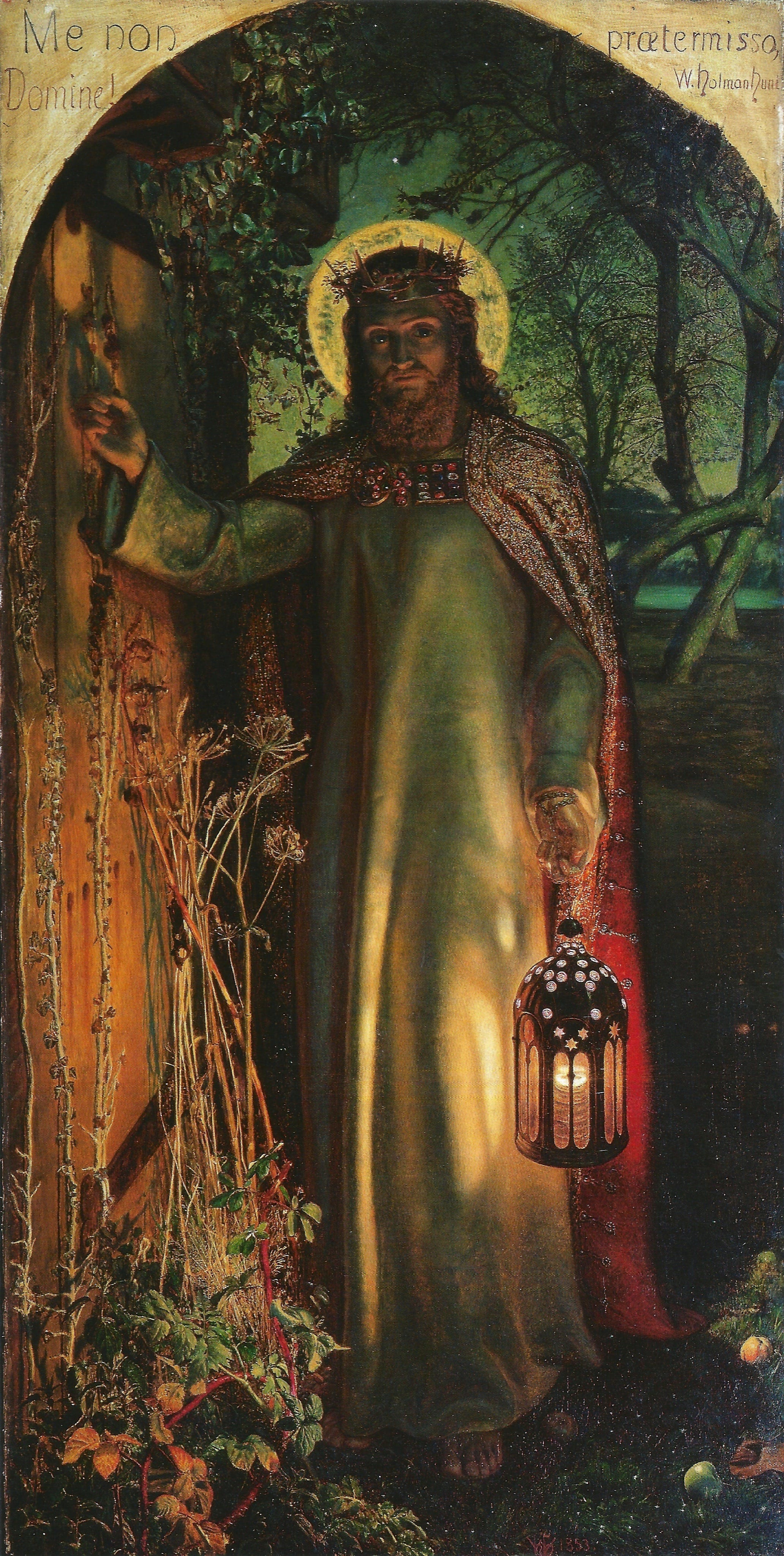
In the Gospel of Thomas, Jesus is recounted saying, “When you make the two into one, and when you make the inner like the outer and the outer like the inner, and the upper like the lower, and when you make male and female into a single one, so that the male will not be male nor the female be female, when you make eyes in place of an eye, a hand in place of a hand, a foot in place of a foot, an image in place of an image, then you will enter the kingdom.”
…
References
1 Warrier, V., Greenberg, D.M., Weir, E. et al. Elevated rates of autism, other neurodevelopmental and psychiatric diagnoses, and autistic traits in transgender and gender-diverse individuals. Nat Commun 11, 3959 (2020). https://doi.org/10.1038/s41467-020-17794-1
2 Weir, E., Allison, C., & Baron-Cohen, S. (2021). The sexual health, orientation, and activity of autistic adolescents and adults. Autism Research, 14(11), 2342–2354. https://doi.org/10.1002/aur.2604