


Editorial note: Jake MacCallum is an elementary school educator and a master’s student of counselling psychology from the East Coast of Canada. He writes about moral psychology and cultural shifts as they happen in plain sight.
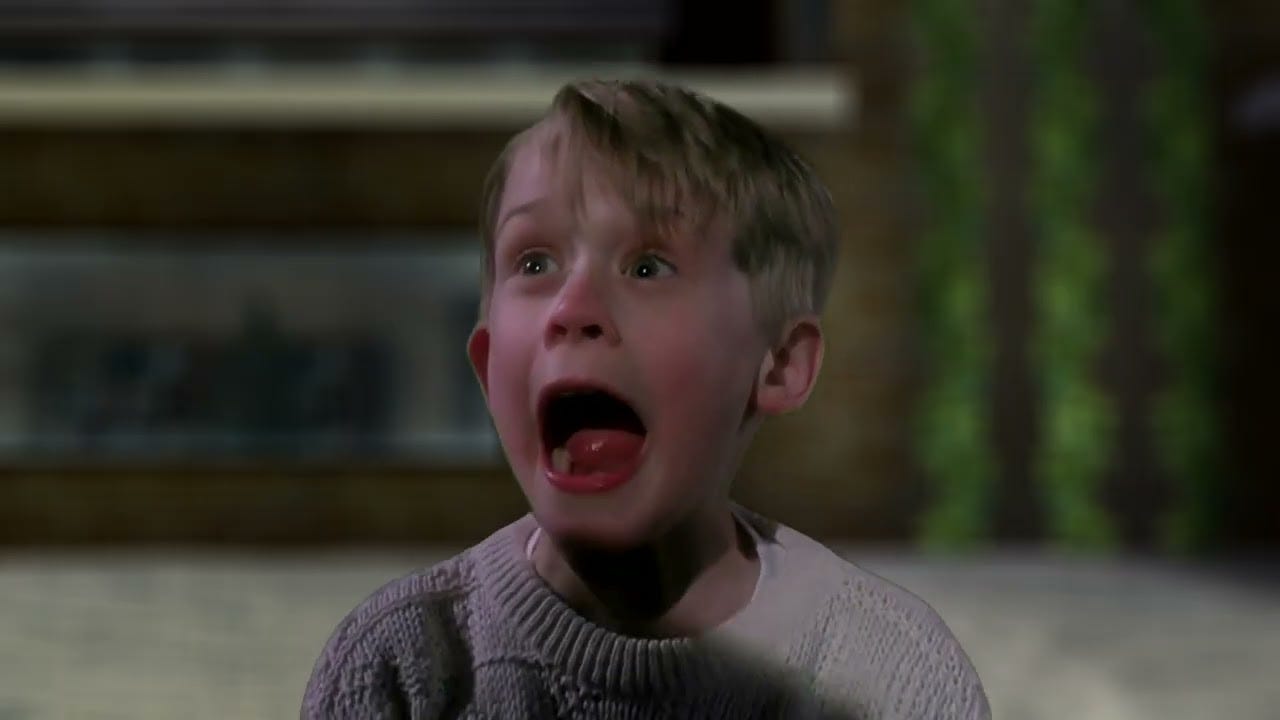
“I’m not afraid anymore!” repeated Kevin McCallister as he prepared to face the legendary Old Man Marley, who salted the street outside his home. But not a second later, he looked the old man in the eye and fully absorbed the subject of his fear, causing him to run back into his home screaming like the little boy he still very much was.
These days, kids don’t seem to be afraid of anything. Teachers who threaten to call home are met with a smug shrug. But no matter how sheltered, kids should be somewhat afraid of their parents because they are avatars of real-world adults. Yes, besides providing love, parents represent and thus prepare their children for the near-infinite terror of the world, which actually encourages the child to leave home one day. But first, the kids will have to overcome a pretty big hurdle and arrive at a pivotal psychological junction.
By default, a baby is egotistical, the ultimate authority over his immediate environment and every selfish wish is granted. Of course, this is because he requires help for his basic needs; this is a properly adapted mechanism for the stage. But soon this “High Chair Tyrant” has to integrate into social worlds more complex than that created by his parents; to do so, he will need to approach them with humility and learn to abide by their much less personalized rules. If this integration fails, which it does if parents and teachers are too lenient, then kids stay infantile in their self-obsession.
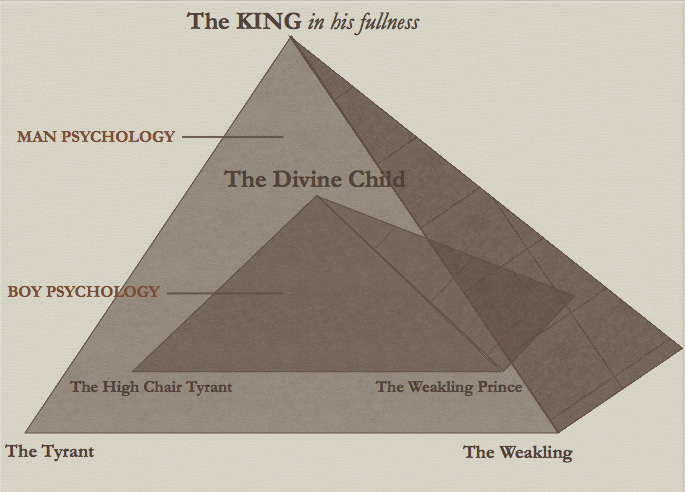
This sounds cruel because it challenges our intuition that kids are inherently innocent. We want to believe that kids are a blank slate and get corrupted by the world. But do not forget that a two-year-old human is a most terribly violent creature, as per the number of times he or she bites, kicks, and steals. True, toddlers may not consciously know what they are doing, but whatever instinctual forces are operating inside of them, whatever chaos possesses them in their fits, has a history and a blueprint, old as time itself, and it doesn’t deserve praise. Obviously, it is hard to admit a cute baby is stained with original sin, or, in a nonreligious sense, bearing the mark of human nature that is inherently flawed and requires maturing to be less so. More on this later.
Nevertheless, you don’t want your kids to be afraid of everything as they step out of the home and into the world, but maybe just the stuff that is worth avoiding, like detention, suspension, and expulsion, which is like a school’s starter kit for the legal system or the objective social-moral order. Fear God if you wish. Don’t be stupid, or you might die. That’s probably a good place to start. But teachers don’t seem to bother with passing out suspensions anymore (I have not heard the word uttered at the elementary school where I work), because they hold no weight at home. If you’re a kid, fear of authority is an afterthought when the power never left your apple-saucey hands.
Infantile Power
Before any budding lifeform matures to a higher level of functioning, it operates by a set of basic drives which mediate and strive for satiation of the appetites. “The Selfish Gene” is firing on all cylinders when a human baby cries to be fed, changed, or consoled because he was struck by another baby. This selfish mode runs on power, as in, the will to achieve one’s desired ends by any means. Hence, the prevalence of bullying among youth is higher than among adults, at least explicitly and somewhat cartoonishly. Before they develop higher-order reasoning and a sophisticated moral framework, represented through traits like generosity and delayed gratification, children rely on these power-laden instincts to survive. If I can push you down to steal your juice box, why shouldn’t I? Since kids are more susceptible to such temptations of power, adults should be wary of granting them a surplus (especially legally).
As I described in my last essay, kids test boundaries, and they ought to. The problem arises, however, when the parents and, by extension, teachers, but particularly fathers, allow the boundaries to be trampled.
